76report

9934305f0b

January 26, 2026
*|MC:SUBJECT|*
͏ ‌     ͏ ‌     ͏ ‌     ͏ ‌     ͏ ‌     ͏ ‌     ͏ ‌     ͏ ‌     ͏ ‌     ͏ ‌     ͏ ‌     ͏ ‌     ͏ ‌     ͏ ‌     ͏ ‌     ͏ ‌     ͏ ‌     ͏ ‌     ͏ ‌     ͏ ‌     ͏ ‌     ͏ ‌     ͏ ‌     ͏ ‌     ͏ ‌     ͏ ‌     ͏ ‌     ͏ ‌     ͏ ‌     ͏ ‌     ͏ ‌     ͏ ‌     ͏ ‌     ͏ ‌     ͏ ‌     ͏ ‌     ͏ ‌     ͏ ‌     ͏ ‌     ͏ ‌     ͏ ‌     ͏ ‌     ͏ ‌     ͏ ‌     ͏ ‌     ͏ ‌     ͏ ‌     ͏ ‌     ͏ ‌     ͏ ‌     ͏ ‌     ͏ ‌     ͏ ‌     ͏ ‌     ͏ ‌     ͏ ‌     ͏ ‌     ͏ ‌     ͏ ‌     ͏ ‌     ͏ ‌     ͏ ‌     ͏ ‌     ͏ ‌     ͏ ‌     ͏ ‌     ͏ ‌     ͏ ‌     ͏ ‌     ͏ ‌     ͏ ‌     ͏ ‌     ͏ ‌     ͏ ‌     ͏ ‌     ͏ ‌     ͏ ‌     ͏ ‌     ͏ ‌     ͏ ‌     ͏ ‌     ͏ ‌     ͏ ‌     ͏ ‌     ͏ ‌     ͏ ‌     ͏ ‌     ͏ ‌     ͏ ‌     ͏ ‌     ͏ ‌     ͏ ‌     ͏ ‌     ͏ ‌     ͏ ‌     ͏ ‌     ͏ ‌     ͏ ‌     ͏ ‌     ͏ ‌     ͏ ‌     ͏ ‌     ͏ ‌     ͏ ‌     ͏ ‌     ͏ ‌     ͏ ‌     ͏ ‌     ͏ ‌     ͏ ‌     ͏ ‌     ͏ ‌     ͏ ‌     ͏ ‌     ͏ ‌     ͏ ‌     ͏ ‌     ͏ ‌     ͏ ‌     ͏ ‌     ͏ ‌     ͏ ‌     ͏ ‌     ͏ ‌     ͏ ‌     ͏ ‌     ͏ ‌     ͏ ‌     ͏ ‌     ͏ ‌     ͏ ‌     ͏ ‌     ͏ ‌     ͏ ‌     ͏ ‌     ͏ ‌     ͏ ‌     ͏ ‌     ͏ ‌     ͏ ‌     ͏ ‌     ͏ ‌     ͏ ‌     ͏ ‌     ͏ ‌     ͏ ‌     ͏ ‌     ͏ ‌     ͏ ‌     ͏ ‌     ͏ ‌     ͏ ‌     ͏ ‌     ͏ ‌     ͏ ‌     ͏ ‌     ͏ ‌     ͏ ‌     ͏ ‌     ͏ ‌     ͏ ‌     ͏ ‌     ͏ ‌     ͏ ‌     ͏ ‌     ͏ ‌     ͏ ‌     ͏ ‌     ͏ ‌     ͏ ‌     ͏ ‌     ͏ ‌     ͏ ‌     ͏ ‌     ͏ ‌     ͏ ‌     ͏ ‌     ͏ ‌     ͏ ‌     ͏ ‌     ͏ ‌     ͏ ‌     ͏ ‌     ͏ ‌     ͏ ‌     ͏ ‌     ͏ ‌     ͏ ‌     ͏ ‌     ͏ ‌     ͏ ‌     ͏ ‌     ͏ ‌     ͏ ‌     ͏ ‌     ͏ ‌     ͏ ‌     ͏ ‌     ͏ ‌     ͏ ‌     ͏ ‌     ͏ ‌     ͏ ‌     ͏ ‌     ͏ ‌     ͏ ‌     ͏ ‌     ͏ ‌     ͏ ‌     ͏ ‌     ͏ ‌     ͏ ‌     ͏ ‌     ͏ ‌     ͏ ‌     ͏ ‌     ͏ ‌     ͏ ‌     ͏ ‌     ͏ ‌     ͏ ‌     ͏ ‌     ͏ ‌     ͏ ‌     ͏ ‌     ͏ ‌     ͏ ‌     ͏ ‌     ͏ ‌     ͏ ‌     ͏ ‌     ͏ ‌     ͏ ‌     ͏ ‌     ͏ ‌     ͏ ‌     ͏ ‌     ͏ ‌     ͏ ‌     ͏ ‌     ͏ ‌     ͏ ‌     ͏ ‌     ͏ ‌     ͏ ‌     ͏ ‌     ͏ ‌     ͏ ‌     ͏ ‌     ͏ ‌     ͏ ‌     ͏ ‌     ͏ ‌     ͏ ‌     ͏ ‌     ͏ ‌     ͏ ‌     ͏ ‌     ͏ ‌     ͏ ‌     ͏ ‌     ͏ ‌     ͏ ‌     ͏ ‌     ͏ ‌     ͏ ‌     ͏ ‌     ͏ ‌     ͏ ‌     ͏ ‌     ͏ ‌     ͏ ‌     ͏ ‌     ͏ ‌     ͏ ‌     ͏ ‌     ͏ ‌     ͏ ‌     ͏ ‌     ͏ ‌     ͏ ‌     ͏ ‌     ͏ ‌     ͏ ‌     ͏ ‌     ͏ ‌     ͏ ‌     ͏ ‌     ͏ ‌     ͏ ‌     ͏ ‌     ͏ ‌     ͏ ‌     ͏ ‌     ͏ ‌     ͏ ‌     ͏ ‌     ͏ ‌     ͏ ‌     ͏ ‌     ͏ ‌     ͏ ‌     ͏ ‌     ͏ ‌     ͏ ‌     ͏ ‌     ͏ ‌     ͏ ‌     ͏ ‌     ͏ ‌     ͏ ‌     ͏ ‌     ͏ ‌     ͏ ‌     ͏ ‌     ͏ ‌     ͏ ‌     ͏ ‌     ͏ ‌     ͏ ‌    ­ ­ ­ ­ ­ ­ ­ ­ ­ ­ ­ ­ ­ ­ ­ ­ ­ ­ ­ ­ ­ ­ ­ ­ ­ ­ ­ ­ ­ ­ ­ ­ ­ ­ ­ ­ ­ ­ ­ ­ ­ ­ ­ ­ ­ ­ ­ ­ ­ ­ ­ ­ ­ ­ ­ ­ ­ ­ ­ ­ ­ ­ ­ ­ ­ ­ ­ ­ ­ ­ ­ ­ ­ ­ ­ ­ ­ ­ ­ ­ ­ ­ ­ ­ ­ ­ ­ ­ ­ ­ ­ ­ ­ ­ ­ ­ ­ ­ ­ ­ ­ ­ ­ ­ ­ ­ ­ ­ ­ ­ ­ ­ ­ ­ ­ ­ ­ ­ ­ ­ ­ ­ ­ ­ ­ ­ ­ ­ ­ ­ ­ ­ ­ ­ ­ ­ ­ ­ ­ ­ ­ ­ ­ ­ ­ ­ ­ ­ ­ ­ ­ ­ ­ ­ ­ ­ ­ ­ ­ ­ ­ ­ ­ ­ ­ ­ ­ ­ ­ ­ ­ ­ ­ ­ ­ ­ ­ ­ ­ ­ ­ ­ ­ ­ ­ ­ ­ ­ ­ ­ ­ ­ ­ ­ ­ ­ ­ ­ ­ ­ ­ ­ ­ ­ ­ ­ ­ ­ ­ ­ ­ ­ ­ ­ ­ ­ ­ ­ ­ ­ ­ ­ ­ ­ ­ ­ ­ ­ ­ ­ ­ ­ ­ ­ ­ ­ ­ ­ ­ ­ ­ ­ ­ ­ ­ ­ ­ ­ ­ ­ ­ ­ ­ ­ ­ ­ ­ ­ ­ ­ ­ ­ ­ ­ ­ ­ ­ ­ ­ ­ ­ ­ ­ ­ ­ ­ ­ ­ ­ ­ ­ ­

76report

January 26, 2026

Gold Hits $5,000: This Is Scarcity, Not Risk Aversion

Gold has crossed $5,000 per ounce and has already advanced more than 15% in 2026, just a few weeks into the new year. Over the past two years, gold is up about 150%.


Everyone is saying investors are running from geopolitical and macroeconomic risk… but does this really make sense? Or is something else going on?


Gold is correctly seen as a safe haven asset that can hold its value or even appreciate when risk perceptions rise or a crisis hits. Historically, it has definitely functioned in this manner—an attractive alternative when risk assets like stocks are under pressure.


So it is not shocking that investors are reading a flight from risk into the ongoing gold rally.


The financial media wholeheartedly embraces this narrative as well. Bloomberg yesterday explained gold crossing the $5,000 threshold as “driven by geopolitical risks and renewed threats to the Federal Reserve’s independence.”


There is a not so subtle subtext to this interpretation that outlets like Bloomberg seem happy to advance. It goes like this: Trump is wrecking everything and sending central banks and private investors scrambling for cover.


“Risk off” is how everybody seems to be describing the gold rally (including many actors who are inclined to promote a particular political narrative).


But we cannot help but notice many other signs across the rest of the capital markets that sharply contradict this explanation.


When investors are in a risk off mode, there is typically evidence all over the place:

  • Stocks decline and earnings multiples compress, reflecting a higher risk premium.

  • Credit spreads widen on expectations of heightened default risk.

  • Long-term Treasury bonds rally as another haven asset.

  • GDP growth expectations move toward zero or even go negative, indicating recession.

  • Other commodities plunge, signaling an expected collapse in demand.


None of this is happening right now.


Instead, the capital markets are signaling a bullish outlook:

  • Global stock indexes are at or close to all-time highs. The S&P 500 has advanced approximately 80% over the past three years.

  • Credit spreads are extremely tight and are at levels not seen in about 20 years, suggesting minimal default risk.

  • Long-term Treasury bond yields are toward the high end of their trading range since the turn of the century.

  • The Atlanta Fed is forecasting 5.4% GDP growth for the fourth quarter of 2025.

  • Commodity prices, including copper, an industrial metal, are in many instances surging.


There are certainly times when gold rallies because investors are running from macroeconomic risk. In early 2020, gold rallied about 20% over the course of a few months after the pandemic struck.


But this is not one of those times. Economic growth is strong. Risk appetite is relatively high.


What about geopolitical risk?


It is true that President Trump is pursuing an assertive foreign policy that is challenging historical arrangements. (See our January 20, 2026 76report—Locking Down the Hemisphere).


Geopolitical uncertainty is one of many reasons that central banks have in recent years chosen to increase their allocations to gold, a reserve asset that is uniquely safe from confiscation risk.


We explained the important role of central bank purchases in our recent year-end deep dive on gold (Gold Rallies 65% in 2025—Why the Rally May Still Have Legs).


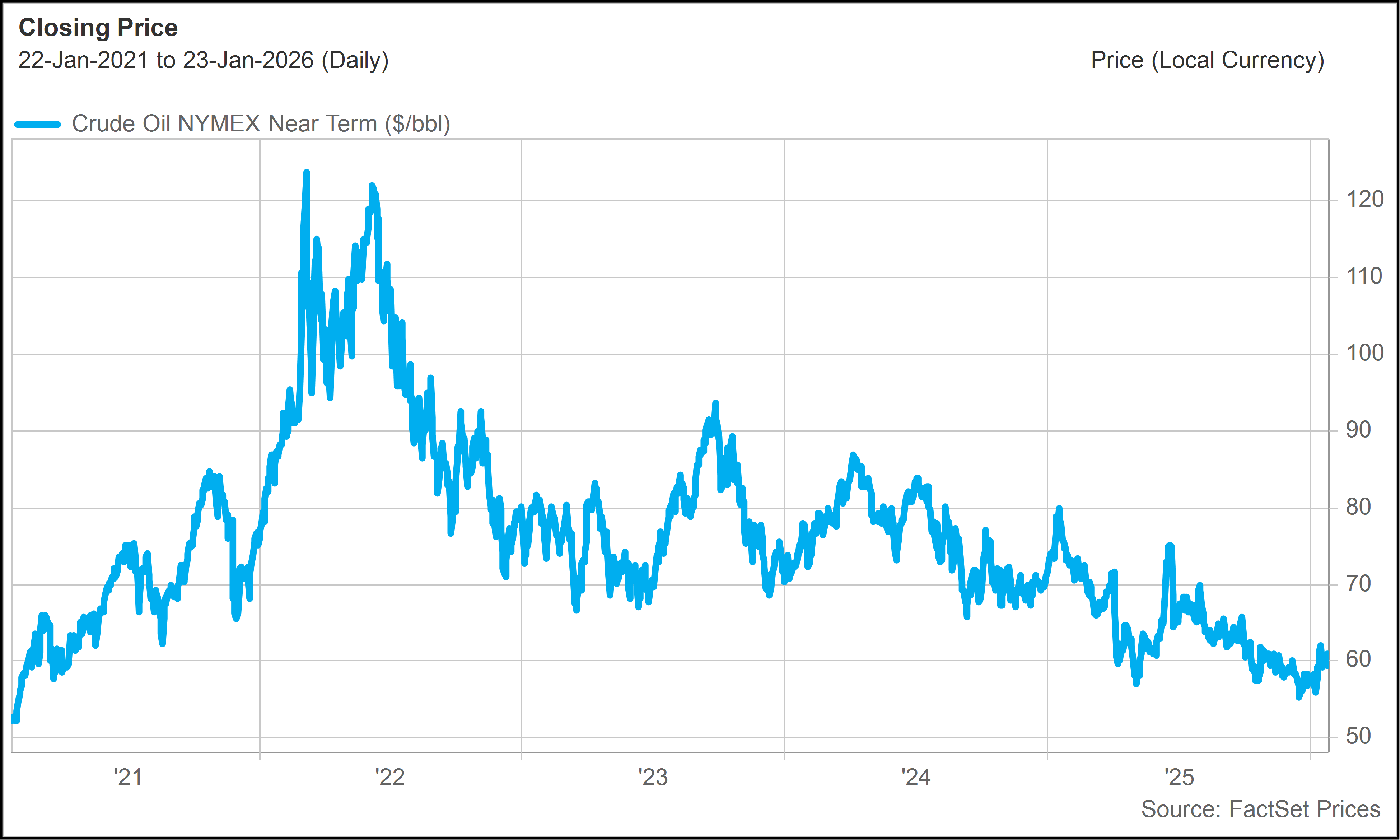
But when geopolitical risk spikes, we also typically see high oil prices, based on fears of potential supply disruptions. For example, after the Russia-Ukraine conflict broke out in 2022. Yet global oil prices are now close to multi-year lows.

Crude Oil (Last 5 Years)

The end of dollar supremacy?


There is a lot of chatter as well about the end of the dollar-based system. It is true that the Trump administration has indicated some preference for a weaker dollar to shrink the trade deficit and help American exporters.


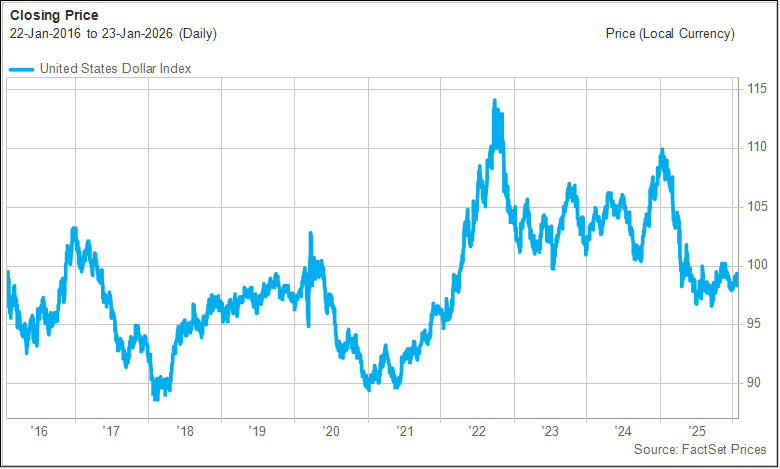
But any dollar weakness we have seen has been moderate, as shown by the Dollar Index, which measures the value of the U.S. dollar relative to other major currencies.


Demand for the U.S. dollar surged in the fourth quarter of last year as capital flowed in the United States following Trump’s victory. This largely reversed in the first half of 2025, leaving the index now just slightly below pre-election levels.


From a more long-term perspective, the Dollar Index is squarely in the middle of its trading range over the past ten years.


Gold is rising, but the U.S. dollar remains the pre-eminent fiat currency for global economic activity. If the dollar-based system is disintegrating, there is no other fiat currency that appears to be taking its place.

The Dollar Index (Last 10 Years)

So what is really happening?


A pessimistic read on the gold rally is that the world is becoming unsettled.


If you dislike Donald Trump and have great distrust for his foreign and economic policy agenda—an attitude that is pervasive across the financial media and the mainstream investment community—you may be inclined to interpret the gold rally in this way.


The problem is that almost all the other financial and economic indicators are sending a different message.


While geopolitical and macroeconomic changes continue to play a role, there is another dimension to the gold rally that investors need to understand:


Gold is being accumulated because it is a supply-constrained store of value in a world that is in the early stages of an AI-driven productivity boom.


This boom has the potential to generate enormous wealth that needs to find a home.


Gold is not rallying because investors fear economic decline. It is rallying because gold offers a unique form of scarcity, and scarce assets tend to appreciate as wealth multiplies.


The link to monetary policy


Gold investors are very sensitive to perceived changes in monetary policy. Gold rallies when monetary policy is becoming easier. We saw this in the aftermath of the Global Financial Crisis, when gold more than doubled between 2008 and 2011.


There is a straightforward explanation for this. The more liquidity central banks like the Federal Reserve create (i.e., the more money they print), the more paper money is available to buy a limited supply of gold.  


Monetary policy normally becomes much easier when central banks are confronting deflation.


In our highly indebted fiat money system, deflation poses unacceptable risks. Deflation makes debt more expensive in real terms (whereas inflation makes debt more manageable).


Debts burdens—whether at the government level or in the private sector—can quickly become unsustainable in deflationary scenarios, leading to defaults, bankruptcies and economic depression.


Inflation is bad, but deflation is a central banker’s worst nightmare. This is why the Fed informally targets 2% inflation rather than 0%—to provide a margin of safety against worst case deflationary outcomes.


After the 2007-2008 financial crisis, the Fed under Ben Bernanke was desperately afraid that excessive private market debt levels would lead to a deflationary spiral. For the first time, the Fed implemented Quantitative Easing (QE), a method of providing additional monetary stimulus when short-term interest rates were already at zero.


Back then, the deflation threat came from businesses, financial institutions and households whose balance sheets were obliterated by the bursting of the housing/mortgage bubble. The Fed went to extreme lengths to make sure this deflation risk did not materialize, and gold investors benefited.  


Productivity-driven deflation


Deflation can be driven by a collapse of economic demand, but it can also be caused by falling prices as producers become more efficient. In contrast with the Global Financial Crisis, we see the deflation threat today coming from a much more benign source: productivity growth.


Productivity growth is accelerating. On January 8, 2026, the Bureau of Labor Statistics announced that third quarter 2025 productivity growth was 4.9%, versus 1.9% in the same quarter a year prior.


This is a rapid improvement. The U.S. economy generated 5.4% more output, while total hours worked only increased 0.5%.


Productivity growth is inherently deflationary. It signals that the economy is operating more efficiently, generating more output per unit of human labor.


Technological innovation is what makes that possible.


One of the starkest examples of productivity-driven deflation is flat screen televisions. Thanks to technological progress, the price of a typical television has plunged, even as quality has improved.


Consumer electronics have led the way in goods deflation in recent years and decades, but what if, thanks to AI and other advances in technology, many other sectors start to see falling prices as well?


Across industries, if businesses can generate more output with fewer workers, their costs go down. If the industry is competitive, as most are, this should lead to lower prices as businesses become more efficient and seek to grow market share.


Consider how this played out with televisions. Production costs went down, and profit margins went up. This allowed new entrants to come into the market and compete on price, sending prices down across the board.


Inflection point


We are potentially in the early stages of this productivity-driven deflation dynamic. Official inflation estimates are still closer to 3% than 2%— but there are signs it is happening.


The Fed started cutting interest rates in the second half of last year because it was observing decelerating inflation and incremental pressure on labor markets.


There is also evidence that current inflation is not as bad as official statistics.


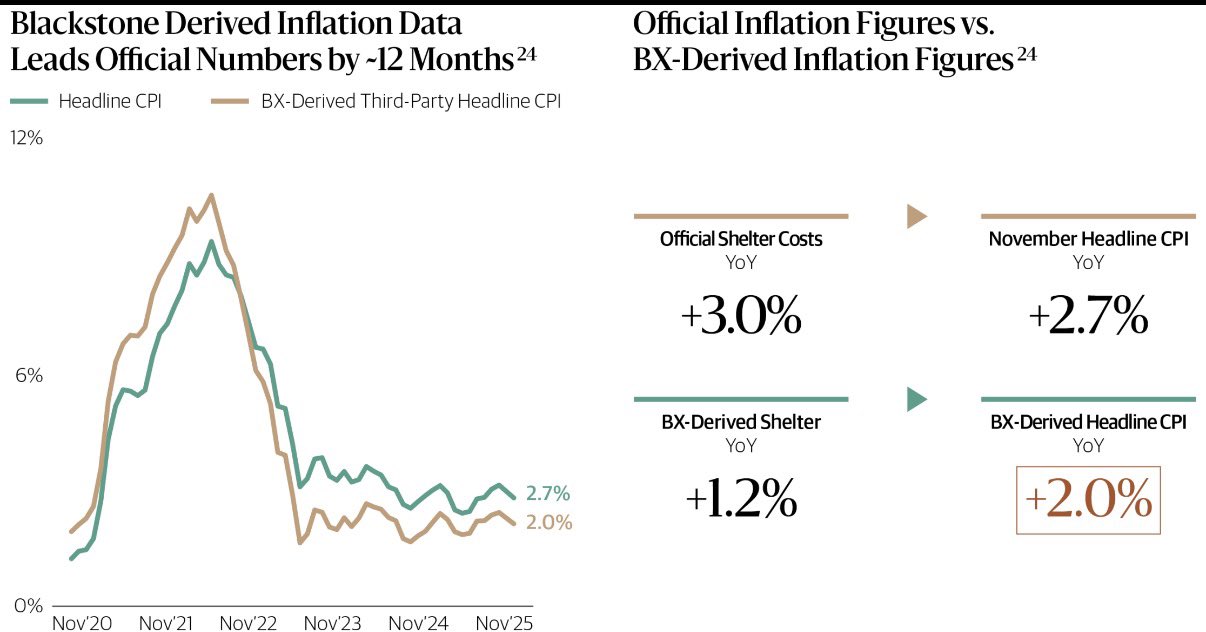
Blackstone (BX) is the world’s largest commercial real estate owner with unique visibility into the housing market. Shelter costs are a major component of the Consumer Price Index (CPI) and among the most complicated to track because rents reprice only gradually.


According to BX, which uses its own internally generated data to track inflation, we are already at 2% inflation rates.


Source: Blackstone 2026 Investment Perspectives

The age of hyperabundance


In December, we wrote about Elon Musk’s vision of hyperabundance and his prediction that people will not need to work a few decades from now (Elon Musk’s Vision of Hyperabundance: Are We Ready?).


Musk’s core insight is very simple: AI is going to make many things very cheap by driving down production costs.


This is great for consumers. But it presents a serious problem for the Fed and other central bankers because our system is not set up for falling prices. It is set up for mild but continuous inflation.


So how will they respond?


They will continue to inject liquidity into the system to make sure inflation stays positive. In other words, they will print money.


For the economy as a whole, this means more nominal economic activity, higher nominal incomes, more paper wealth and only mild inflation. Goods and services will not necessarily get cheaper in nominal terms, but more money circulating within the system means households should have more resources to pay for them.


The real winners of this dynamic, however, should be the owners of scarce assets—the things AI simply cannot replace or make cheaper.


Put simply, there will be a lot more nominal wealth in the world competing for good, services and investible assets. Truly scarce assets therefore have tremendous upside potential as this scenario unfolds.


It’s not just gold


Gold is among the scarce assets that stand to thrive in an environment of productivity-driven easy money. But it is not alone.


In our Inflation Protection Model Portfolio strategy, we target business that embody scarcity. This includes gold-related stocks, which have performed exceptionally well, but also other commodities, natural resources, real estate and infrastructure plays.


In just the first few weeks of this year, the Inflation Protection portfolio has generated a total return of 10.4% through January 23, 2026, versus 1.1% for the S&P 500.


What is primarily driving all this is not risk aversion. Or geopolitical chaos. It is a desire to own true scarcity in a world of rising economic abundance.


Some people want to present gold hitting $5,000 as a sign of trouble ahead and political mismanagement. Our suggestion is to recognize and look beyond these agendas.


Instead, stay focused on owning scarce assets that stand to do well in an economy that is generating real growth driven by revolutionary technological innovation.

Click HERE to learn more about our Model Portfolio subscription plans.

FOR SUBSCRIBER USE ONLY. DO NOT FORWARD OR SHARE.

This is an automated post