76report

4d1dafbb19

December 24, 2025
*|MC:SUBJECT|*
͏ ‌     ͏ ‌     ͏ ‌     ͏ ‌     ͏ ‌     ͏ ‌     ͏ ‌     ͏ ‌     ͏ ‌     ͏ ‌     ͏ ‌     ͏ ‌     ͏ ‌     ͏ ‌     ͏ ‌     ͏ ‌     ͏ ‌     ͏ ‌     ͏ ‌     ͏ ‌     ͏ ‌     ͏ ‌     ͏ ‌     ͏ ‌     ͏ ‌     ͏ ‌     ͏ ‌     ͏ ‌     ͏ ‌     ͏ ‌     ͏ ‌     ͏ ‌     ͏ ‌     ͏ ‌     ͏ ‌     ͏ ‌     ͏ ‌     ͏ ‌     ͏ ‌     ͏ ‌     ͏ ‌     ͏ ‌     ͏ ‌     ͏ ‌     ͏ ‌     ͏ ‌     ͏ ‌     ͏ ‌     ͏ ‌     ͏ ‌     ͏ ‌     ͏ ‌     ͏ ‌     ͏ ‌     ͏ ‌     ͏ ‌     ͏ ‌     ͏ ‌     ͏ ‌     ͏ ‌     ͏ ‌     ͏ ‌     ͏ ‌     ͏ ‌     ͏ ‌     ͏ ‌     ͏ ‌     ͏ ‌     ͏ ‌     ͏ ‌     ͏ ‌     ͏ ‌     ͏ ‌     ͏ ‌     ͏ ‌     ͏ ‌     ͏ ‌     ͏ ‌     ͏ ‌     ͏ ‌     ͏ ‌     ͏ ‌     ͏ ‌     ͏ ‌     ͏ ‌     ͏ ‌     ͏ ‌     ͏ ‌     ͏ ‌     ͏ ‌     ͏ ‌     ͏ ‌     ͏ ‌     ͏ ‌     ͏ ‌     ͏ ‌     ͏ ‌     ͏ ‌     ͏ ‌     ͏ ‌     ͏ ‌     ͏ ‌     ͏ ‌     ͏ ‌     ͏ ‌     ͏ ‌     ͏ ‌     ͏ ‌     ͏ ‌     ͏ ‌     ͏ ‌     ͏ ‌     ͏ ‌     ͏ ‌     ͏ ‌     ͏ ‌     ͏ ‌     ͏ ‌     ͏ ‌     ͏ ‌     ͏ ‌     ͏ ‌     ͏ ‌     ͏ ‌     ͏ ‌     ͏ ‌     ͏ ‌     ͏ ‌     ͏ ‌     ͏ ‌     ͏ ‌     ͏ ‌     ͏ ‌     ͏ ‌     ͏ ‌     ͏ ‌     ͏ ‌     ͏ ‌     ͏ ‌     ͏ ‌     ͏ ‌     ͏ ‌     ͏ ‌     ͏ ‌     ͏ ‌     ͏ ‌     ͏ ‌     ͏ ‌     ͏ ‌     ͏ ‌     ͏ ‌     ͏ ‌     ͏ ‌     ͏ ‌     ͏ ‌     ͏ ‌     ͏ ‌     ͏ ‌     ͏ ‌     ͏ ‌     ͏ ‌     ͏ ‌     ͏ ‌     ͏ ‌     ͏ ‌     ͏ ‌     ͏ ‌     ͏ ‌     ͏ ‌     ͏ ‌     ͏ ‌     ͏ ‌     ͏ ‌     ͏ ‌     ͏ ‌     ͏ ‌     ͏ ‌     ͏ ‌     ͏ ‌     ͏ ‌     ͏ ‌     ͏ ‌     ͏ ‌     ͏ ‌     ͏ ‌     ͏ ‌     ͏ ‌     ͏ ‌     ͏ ‌     ͏ ‌     ͏ ‌     ͏ ‌     ͏ ‌     ͏ ‌     ͏ ‌     ͏ ‌     ͏ ‌     ͏ ‌     ͏ ‌     ͏ ‌     ͏ ‌     ͏ ‌     ͏ ‌     ͏ ‌     ͏ ‌     ͏ ‌     ͏ ‌     ͏ ‌     ͏ ‌     ͏ ‌     ͏ ‌     ͏ ‌     ͏ ‌     ͏ ‌     ͏ ‌     ͏ ‌     ͏ ‌     ͏ ‌     ͏ ‌     ͏ ‌     ͏ ‌     ͏ ‌     ͏ ‌     ͏ ‌     ͏ ‌     ͏ ‌     ͏ ‌     ͏ ‌     ͏ ‌     ͏ ‌     ͏ ‌     ͏ ‌     ͏ ‌     ͏ ‌     ͏ ‌     ͏ ‌     ͏ ‌     ͏ ‌     ͏ ‌     ͏ ‌     ͏ ‌     ͏ ‌     ͏ ‌     ͏ ‌     ͏ ‌     ͏ ‌     ͏ ‌     ͏ ‌     ͏ ‌     ͏ ‌     ͏ ‌     ͏ ‌     ͏ ‌     ͏ ‌     ͏ ‌     ͏ ‌     ͏ ‌     ͏ ‌     ͏ ‌     ͏ ‌     ͏ ‌     ͏ ‌     ͏ ‌     ͏ ‌     ͏ ‌     ͏ ‌     ͏ ‌     ͏ ‌     ͏ ‌     ͏ ‌     ͏ ‌     ͏ ‌     ͏ ‌     ͏ ‌     ͏ ‌     ͏ ‌     ͏ ‌     ͏ ‌     ͏ ‌     ͏ ‌     ͏ ‌     ͏ ‌     ͏ ‌     ͏ ‌     ͏ ‌     ͏ ‌     ͏ ‌     ͏ ‌     ͏ ‌     ͏ ‌     ͏ ‌     ͏ ‌     ͏ ‌     ͏ ‌     ͏ ‌     ͏ ‌     ͏ ‌     ͏ ‌     ͏ ‌     ͏ ‌     ͏ ‌     ͏ ‌     ͏ ‌     ͏ ‌     ͏ ‌     ͏ ‌     ͏ ‌     ͏ ‌     ͏ ‌     ͏ ‌     ͏ ‌     ͏ ‌     ͏ ‌     ͏ ‌     ͏ ‌     ͏ ‌     ͏ ‌     ͏ ‌     ͏ ‌     ͏ ‌    ­ ­ ­ ­ ­ ­ ­ ­ ­ ­ ­ ­ ­ ­ ­ ­ ­ ­ ­ ­ ­ ­ ­ ­ ­ ­ ­ ­ ­ ­ ­ ­ ­ ­ ­ ­ ­ ­ ­ ­ ­ ­ ­ ­ ­ ­ ­ ­ ­ ­ ­ ­ ­ ­ ­ ­ ­ ­ ­ ­ ­ ­ ­ ­ ­ ­ ­ ­ ­ ­ ­ ­ ­ ­ ­ ­ ­ ­ ­ ­ ­ ­ ­ ­ ­ ­ ­ ­ ­ ­ ­ ­ ­ ­ ­ ­ ­ ­ ­ ­ ­ ­ ­ ­ ­ ­ ­ ­ ­ ­ ­ ­ ­ ­ ­ ­ ­ ­ ­ ­ ­ ­ ­ ­ ­ ­ ­ ­ ­ ­ ­ ­ ­ ­ ­ ­ ­ ­ ­ ­ ­ ­ ­ ­ ­ ­ ­ ­ ­ ­ ­ ­ ­ ­ ­ ­ ­ ­ ­ ­ ­ ­ ­ ­ ­ ­ ­ ­ ­ ­ ­ ­ ­ ­ ­ ­ ­ ­ ­ ­ ­ ­ ­ ­ ­ ­ ­ ­ ­ ­ ­ ­ ­ ­ ­ ­ ­ ­ ­ ­ ­ ­ ­ ­ ­ ­ ­ ­ ­ ­ ­ ­ ­ ­ ­ ­ ­ ­ ­ ­ ­ ­ ­ ­ ­ ­ ­ ­ ­ ­ ­ ­ ­ ­ ­ ­ ­ ­ ­ ­ ­ ­ ­ ­ ­ ­ ­ ­ ­ ­ ­ ­ ­ ­ ­ ­ ­ ­ ­ ­ ­ ­ ­ ­ ­ ­ ­ ­ ­ ­ ­ ­ ­ ­ ­ ­ ­ ­ ­ ­ ­ ­

76report

December 24, 2025

Is the Golden Age Beginning?

The data is coming in—and it is starting to look genuinely impressive.


Yesterday’s GDP report showed the U.S. economy grew at a 4.3% annualized rate in the third quarter of 2025. That followed an already strong 3.8% pace in the prior quarter and materially surpassed consensus expectations in the 3.2%–3.3% range.


This rate of growth exceeds long-term trends. For context, real GDP growth has averaged just 2.0%–2.5% over the past two decades.


By almost any objective measure, the economy is performing well. Growth is strong, the stock market is at all-time highs, and inflation continues to ease.


This was a blowout GDP report.


And yet, most Americans seem to believe the economy is headed in the wrong direction.


Gallup’s Economic Confidence Index has fallen to its lowest level since July 2024, with more than two-thirds of respondents saying economic conditions are deteriorating.


Economic sentiment is shaped less by hard data than by media coverage and political framing. It does not always track underlying fundamentals. Right now, it clearly is not.


We see this disconnect as temporary. There are real pockets of weakness, and not everyone is benefiting equally from today’s economy. But at the aggregate level, growth remains solid and broad-based.


One key factor weighing on public confidence is the recent uptick in the unemployment rate, which is paired with growing anxiety around AI-driven job displacement. Those concerns deserve scrutiny.


As we discuss below, a closer look at labor market dynamics tells a far more constructive story, particularly in the private sector.


And to the extent AI-driven productivity gains introduce modest slack in employment, they also create room for easier monetary policy ahead, which would be a boon to the economy as a whole and investors in particular.


Making sense of the shift


When Donald Trump was elected just over a year ago, markets cheered. Under the Biden administration, economic policy was tilted in the direction of higher taxes, larger government, restrictions on energy production, and heavier regulation.


Trump repudiated all of that.


His economic agenda emphasized growth, innovation, energy abundance and industrial renewal. He offered the promise of a new Golden Age of prosperity that would come from unleashing the power of American ingenuity as well as the country’s vast natural resources.

My fellow citizens, the Golden Age of American begins right now…. I return to the presidency confident and optimistic that we are at the start of a thrilling new era of national success. A tide of change is sweeping the country, sunlight is pouring over the entire world, and America has the chance to seize this opportunity like never before. - Donald Trump, Inaugural Address (1/20/2025)


The S&P 500 posted solid gains immediately after Trump’s commanding victory, rallying about 5% in the weeks that followed.


This initial enthusiasm, however, was not sustained. Although stocks are on track to perform very well this year—the S&P 500 is up more than 15% year to date, with the Nasdaq Composite up more than 20%—we have seen some turbulence along the way.


The biggest air pocket came in April 2025, when market sentiment disintegrated as Trump unveiled his Liberation Day tariff strategy.


As we recently discussed (Stocks Rise on Lower Inflation as Tariff Fears Subside), many economists and investors expected tariffs to lead to slower growth, possibly even a recession, and persistently high inflation.


These fears, in retrospect, were misplaced. Last week, we got news that inflation is actually descending at an unexpectedly fast pace. And today, we learned that real growth is accelerating.


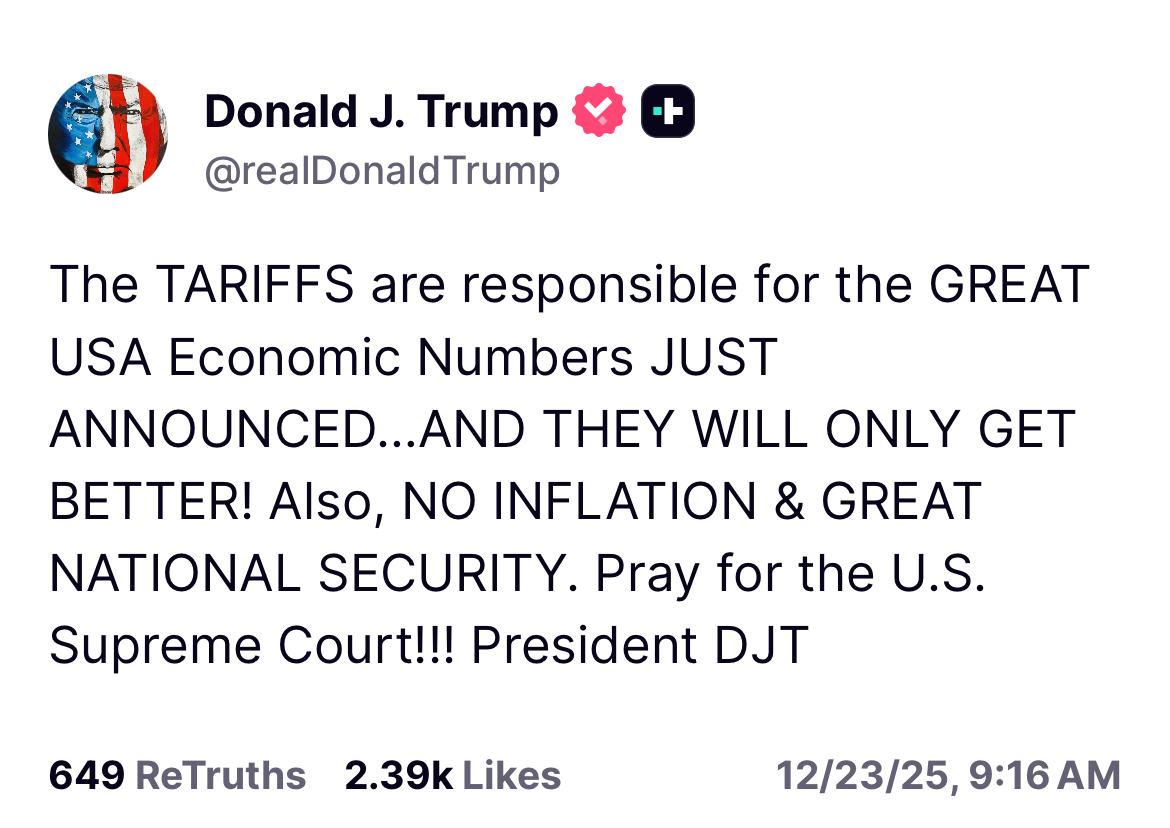
Trump is keen to attribute this recent success to the tariffs themselves. Whereas conventional wisdom back in April saw tariffs as highly damaging, Trump sees them as America’s secret weapon.

Trump Reacts to GDP on Truth Social

Tariff pros and cons


Prevailing economic models depict tariffs as harmful. The thinking is that tariffs make everyday goods more expensive and disrupt how markets normally work.


By taxing imports, tariffs push companies and consumers to buy higher-cost alternatives instead of cheaper or better ones from abroad. That raises prices and lowers purchasing power.


Tariffs can also hurt businesses that rely on imported inputs. They can trigger retaliation from other countries, reducing exports and global trade.


In these widely accepted models, tariffs make the economy less efficient overall, with slower growth and lower living standards—even if some domestic industries receive short-term protection.


What the conventional wisdom on tariffs arguably misses, however, is that tariffs can drive better economic outcomes as a negotiation tool. Just as they can cause harm through retaliation, they can create benefits from compliance.


The threat of tariffs (or higher tariff rates) has persuaded other countries to make significant investments in the United States, which helps boost growth. The threat of tariffs has also driven other concessions, like facilitating more U.S. exports.


Tariff critics tend to overlook another important point. Yes, tariffs can be damaging as a form of taxation… but they allow for lighter taxation elsewhere in the economy.


The federal government needs to generate revenue somehow. Tariffs create certain inefficiencies but so do personal income taxes, taxes on investments, and taxes on corporate profits.


Any revenue generated from taxes gives the government leeway to tax other economic activities less heavily. Standard economic models tend to look at tariffs in isolation.


Beyond tariffs


As interesting as the tariff debate is, it is possible, if not likely, that it is also a bit of a distraction.


In mid-December, New York Fed President John Williams estimated that tariffs added 0.5% to inflation in 2025. He also shared his view that this impact was a one-time event.


Half of one percent is not zero, but in the grand scheme of things, it is somewhat insignificant.


The Consumer Price Index (CPI) rose 24% over the past 5 years, with the vast majority of this occurring prior to Trump taking office. If Williams is right, tariffs accounted for only 2% of the inflation we have experienced since the end of 2020.


The reality is that the U.S. economy is influenced by many factors other than the fees assessed on foreign imports.


To attribute everything that happens to the economy to tariffs, good or bad, is like thinking a car’s tires are all that matter as far as how well it can perform. Sure, the quality of tires can make a difference, but other variables, like how big the engine is, or how skilled the driver is, count much more.


The financial media seems to like to dwell on tariffs because it is the key economic policy controversy that separates Trump from the mainstream. If the economy falters, for whatever reason, they can point to tariffs as the cause—a self-inflicted wound for which Trump alone is responsible.


The media may continue to cling to its narratives, but investors should focus on what really matters, especially as tariff impacts recede into the rearview mirror.


What is really making the difference in the U.S. economy now is innovation-driven growth, particularly as it relates to AI. And we are now seeing it show up in the numbers in the form of strong productivity growth and mild inflation.


What about jobs?


Not everything is perfect. GDP growth may be high, inflation may be coming down… but the unemployment rate has in fact been rising.


The unemployment rate was 4.6% in November 2025, up from 4.2% when Trump was elected in November 2024.


Rising unemployment is both a frightening headline and, for many Americans, a practical reality they encounter in their own lives.


The increase in the unemployment rate also aligns with emerging fears that AI will lead to widespread joblessness. This helps explain gloomy public sentiment, which Trump’s political opponents are certainly keen to promote.


In early December, Senator Bernie Sanders called for a moratorium on all new AI data center construction, claiming among other things the potential risk of 100 million jobs disappearing.


While there is much to criticize in Sanders’ desire to bring technological progress to a halt, his stance on AI points to a more general concern—and it is a valid one—that the AI economy is “K-shaped.”


Many Americans are not at the moment benefiting in a direct way from the strong stock market and the tech sector boom.


Those at the top are thriving—well-paid, with growing portfolios.


Those at the bottom, including the 40% of the U.S. population that has no ownership of stocks, are legitimately worried that their livelihoods, from cab drivers to call center workers, will soon be eliminated by technology.


Rising unemployment rates are naturally alarming, especially when they are paired with hard to decipher technological change. But a closer look at the details of recent employment trends should provide some comfort.


Job losses are largely public sector


Almost half the rise in the unemployment rate over the past year is explained by shrinking federal government payrolls. The Trump administration has deliberately reduced the federal government’s footprint.


Federal government employment is down 271,000 since reaching a peak in January 2025. This is against a base of approximately 160 million public and private sector jobs in the United States.


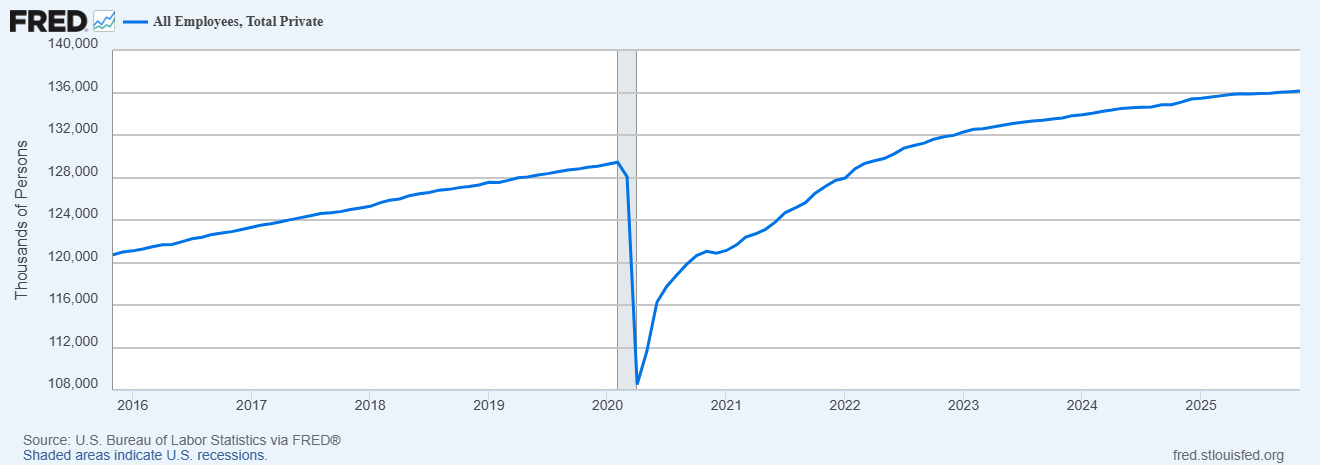
Meanwhile, private sector employment continues to grow, albeit at a slightly slower pace than it has over the past few years.


Total Private Sector Employment

(Last 10 Years)

The mild deceleration in private sector employment can only be understood in a historical context.


The private sector experienced extremely sharp job losses in early 2020, as the pandemic led to massive reductions in several industries, such as travel and hospitality. Remarkably, more than 15% of all private sector jobs were lost within a year.


As the economy later reopened, new jobs were created at a rapid pace, although not as quickly as they were lost. Now, five years later, private sector employment is finally back to the pre-2020 trendline.


In other words, the private sector is more or less back to full employment levels after a multi-year post-pandemic adjustment period.


Is AI to blame?


We recently wrote about Elon Musk’s prediction that work will be “optional” in a decade or two (Elon Musk’s Vision of Hyperabundance). The basic premise is that the economy will be so efficient and productive that nobody will have to work to survive. Essential goods and services will be readily available.


This does not necessarily mean there will be no jobs for those who do seek to work. AI will likely replace many types of jobs, but, consistent with other technological advances, it will create wealth and fuel economic growth that generates new jobs.


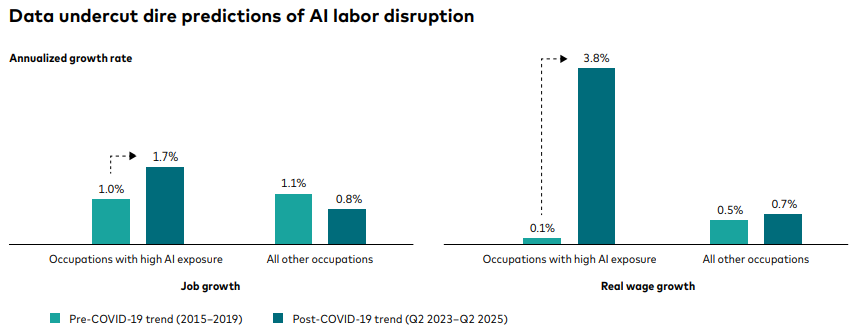
A recent study released by Vanguard pushes back on the “AI as job destroyer” narrative. It found higher rates of job and wage growth in occupations that have been most affected by AI.


In other words, in areas where AI has helped create the most productivity growth, AI has actually generated more demand for workers. This actually makes sense, because AI tools make workers in these areas more productive and valuable.    

(Source: Vanguard)

[I]f AI were causing widespread job cuts, that would appear in overall labor market trends. Instead, the approximately 100 occupations most exposed to AI automation are actually outperforming the rest of the labor market in terms of job growth and real wage increases. This suggests that current AI systems are generally enhancing worker productivity and shifting workers’ tasks toward higher-value activities. - Vanguard research (12/2025)


Rate cuts ahead


Mildly rising unemployment may hurt economic sentiment across the population. This is especially true among younger entry-level workers who have borne the brunt of it over the past year, according to Federal Reserve survey data.


But from an investor’s perspective, there is a valuable silver lining to labor market slack.


The total return of the S&P 500 over the two-year period covering 2022 and 2023 was a paltry 3%. This was a time frame that saw unemployment rates dip all the way down to 3.4%.


When unemployment gets too low and businesses struggle to find workers, it contributes to inflation. This leads to higher interest rates, as the Fed is forced to tighten. Higher rates put pressure on the stock market.


What we have now are conditions opposite to the 2022-2023 time frame. This is an environment in which the economy is generating growth without labor market tightness.


To the extent inflation stays subdued, the Fed should have a green light to keep easing, especially as the labor market stays soft.


How the Golden Age actually arrives


There is no question AI will replace many job functions, but in doing so, it will make the economy more efficient. This will create more wealth and economic demand and help keep inflation low.


So long as inflation is low, the Fed can keep fueling the economy with liquidity, raising asset prices. The only thing that causes this dynamic to break down is a labor market that becomes too tight, forcing the Fed to become more restrictive.


To the extent AI productivity gains prevent businesses from experiencing worker shortages, inflation should stay low (barring other supply shocks). The Fed can then keep printing money for the benefit of the economy as a whole. Investors in the stock market and other risk assets should benefit disproportionately.


If we are indeed on the cusp of a new Golden Age, it is because we will have an AI-driven productivity boom that permits non-inflationary growth and non-restrictive monetary policy.


As we exit 2025, the sentiment surveys may be bleak, but there is mounting evidence that this productivity boom is actually happening.

Click HERE to learn more about our Model Portfolio subscription plans.

FOR SUBSCRIBER USE ONLY. DO NOT FORWARD OR SHARE.

This is an automated post